
How to Train a Golden Retriever Puppy: Practical Steps for Everyday Life
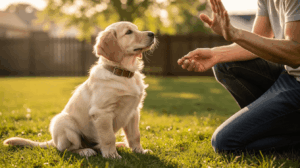
Start training your Golden Retriever puppy when you bring them home. Reward behaviors you want, establish predictable bathroom and rest routines, and teach simple skills in short sessions. Introduce new people, sounds, and environments gradually, with veterinary guidance on health precautions.
Goldens often enjoy working with people, but they do not arrive knowing household rules. Progress depends on your puppy’s development, comfort, and practice. Build useful habits now rather than expecting perfect obedience or a fixed graduation date.
Set Up Your Puppy’s First Days
Create a puppy-proofed area with a comfortable resting space. Remove accessible cords, shoes, and small objects. Use gates or a pen when you cannot supervise closely, and provide suitable chew toys.
Follow a flexible rhythm: bathroom break, meal, gentle play or training, another bathroom opportunity, then rest. Take your puppy outside after waking and watch for signs they need to go between scheduled trips.
Agree on cues and household rules with everyone involved. Reward four paws on the floor, offer toys for chewing, and provide quiet breaks before your puppy becomes overwhelmed.
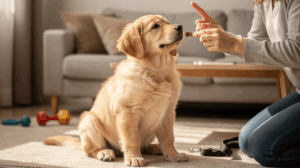
Build Reliable Potty Habits
Take your puppy to a consistent outdoor area after waking, meals, drinking, and active play. Young puppies need frequent opportunities; adjust the schedule to their actual pattern rather than relying on an age-based bladder formula.
Stay nearby and reward immediately after outdoor elimination. When indoors, watch for sniffing, circling, or suddenly wandering away. If you notice these signs, offer another trip outside.
Clean accidents calmly with a suitable pet urine cleaner. Punishment after discovering a puddle does not explain where your puppy should go. Keep a log of meals, bathroom trips, and accidents to identify patterns.
VCA’s puppy housetraining guidance emphasizes supervision and consistent opportunities. Contact your veterinarian about painful urination, unusual frequency, or unexplained regression.
Introduce the Crate Without Rushing
Choose a crate that allows your puppy to stand, turn, and lie comfortably. Encourage voluntary exploration with treats and meals near or inside the open crate. Avoid pushing the puppy inside or using confinement as punishment.
When your puppy is comfortable, practice briefly closing the door while you remain nearby. Increase time gradually, keeping bathroom needs and comfort in mind.
Crying can indicate a need to eliminate, discomfort, or distress. Check those needs rather than requiring silence before responding. Persistent vocalization, salivation, or escape attempts warrant reassessing the plan and seeking veterinary guidance.

Teach Four Useful Foundation Skills
Name Recognition and Attention
In a quiet room, say your puppy’s name once. When they look toward you, mark the response with “yes” or a click, then reward. Also reward voluntary check-ins during daily activities. Avoid repeatedly calling when your puppy is too distracted to respond.
Sit
Move a treat slowly from your puppy’s nose slightly upward and back. When their bottom reaches the floor, mark and reward. Do not push their hips down. Once the movement becomes familiar, gradually reduce the food lure and add a consistent cue before the action.
Come When Called
Start a few steps away in a secure, low-distraction space. Call cheerfully, move away slightly, and reward your puppy for reaching you. Practice on a suitable leash or long line outdoors. Increase distance and distractions gradually; retain physical safety while reliability develops.
Loose-Leash Walking
Begin indoors or in a quiet, appropriate outdoor area. Reward a few steps beside you with a slack leash. If pulling starts, pause and encourage your puppy back toward you. Resume when the leash relaxes. Allow sniffing opportunities rather than expecting a formal heel throughout every outing.
Keep sessions brief and enjoyable. End before frustration builds, and make the next repetition easier when your puppy struggles. Simple obedience can develop alongside potty and crate routines.
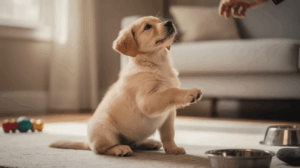
Socialize Safely and Practice Gentle Handling
Socialization means building comfortable associations, not meeting every person or dog. Introduce varied sights, surfaces, and sounds at an intensity your puppy can tolerate. Pair experiences with rewards and allow distance or retreat when needed.
AVSAB’s puppy socialization statement identifies the first three months as especially important. Appropriate exposure can begin before full vaccination with health precautions; ask your veterinarian about local risks and suitable classes. Avoid high-traffic dog areas with unknown vaccination status.
Practice brief touches to paws, ears, and coat, rewarding comfort. Stop before handling becomes a struggle. Continue positive experiences as your puppy grows.
Manage Mouthing, Jumping, and Adolescent Changes
Offer an appropriate toy when your puppy mouths hands or clothing. Pause play calmly if teeth contact skin, and consider whether the puppy needs rest. Supervise chew toys and replace damaged items.
Reward calm greetings with four paws on the floor. Use management during arrivals so jumping is less likely to succeed.
Reward your puppy for choosing to settle on a comfortable mat nearby. Start while you remain close, then practice small movements without asking for longer stays than they can manage.
As distractions increase, revisit easier exercises. Growing puppies still need rest, enrichment, and activity suited to their health. Training continues beyond puppyhood; no single age guarantees completion.
Frequently Asked Questions
When Should Golden Retriever Puppy Training Start?
Begin gentle, reward-based training when your puppy comes home. Start with routines, attention, and simple skills suited to their comfort.
How Long Should Training Sessions Last?
Use brief sessions your puppy can enjoy without becoming frustrated. Several short opportunities throughout the day can fit naturally into routines.
How Long Does Potty Training Take?
There is no guaranteed completion date. Development, supervision, health, and consistent bathroom opportunities influence progress.
How Do I Reduce Puppy Biting?
Redirect mouthing toward suitable toys and pause rough play calmly. Persistent, concerning behavior deserves professional assessment rather than harsher corrections.
Can My Puppy Socialize Before Full Vaccination?
Yes, appropriate socialization can begin with health precautions. Ask your veterinarian about safe settings and vaccination requirements for puppy classes.
Puppy Training Support in Dayton
Explore puppy training options for guidance on the foundations. Contact the Dayton team to discuss your puppy’s needs and suitable starting options.
Would you like a certified trainer to contact you?
PPC Contact Form
"*" indicates required fields
