
Training Stubborn Dog Breeds: Practical Strategies That Work
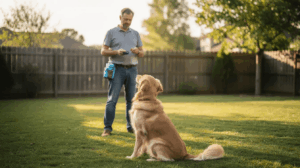
Training stubborn dog breeds can be frustrating. If your Husky ignores your recall at the park, your Shiba Inu doesn’t respond when you say “sit,” or your Basset Hound follows a scent instead of your cue, you’re not alone. These dogs aren’t necessarily untrainable. Your dog’s interests, training history, and surroundings may call for a different approach.
This article focuses on practical, at-home strategies for owners dealing with stubborn behavior, plus guidance on when to seek professional help. It’s for pet owners in and around Dayton, Ohio, and elsewhere who want clearer communication and safer handling in everyday situations.
Here’s the starting point: a dog that seems “stubborn” may be distracted, confused by inconsistent cues, or still learning to respond in that environment. Fear, discomfort, and illness can also affect behavior. Start by understanding the difficulty rather than assuming defiance. Clear cues, suitable rewards, and gradual practice can help, but no training method guarantees off-leash safety.
What you’ll learn in this article:
- How breed history and individual differences can affect training
- How to distinguish confusion, distraction, and stress
- How to use clear cues, useful rewards, and manageable practice sessions
- How to build recall while keeping physical safety measures in place
- When to seek veterinary or professional training help
Understanding Stubbornness in Dog Breeds
When owners say their dog is “stubborn,” they usually mean the dog isn’t responding as expected. That description doesn’t explain the cause. Competing interests, unclear cues, limited practice, and stress can look similar. Understanding what happens before and after the behavior is the starting point for a useful training plan.
Genetics, Breed Purpose, and Independence
Breed history can offer clues about what a dog finds rewarding. Sled dogs were developed for pulling, scent hounds for following trails, and livestock guardians for protecting animals. That background can help explain why movement or smells compete with your attention, but it doesn’t tell you exactly how an individual dog will behave.
Research on canine genetics and behavior found substantial variation within breeds. Breed background is one part of the picture, alongside a dog’s experiences and environment. Watch your own dog rather than treating a breed label as a training diagnosis.
The takeaway: breed tendencies can help you choose activities and rewards, but training decisions should follow the dog in front of you.
Stubborn vs. Confused vs. Unmotivated
Before changing the training plan, look at the situation. Several problems can resemble stubbornness:
- Distracted or not ready for this setting: Your dog responds in the kitchen but struggles when a squirrel appears. That shows the outdoor task is harder; it doesn’t prove the dog is deliberately disobeying.
- Confused: One person uses “down” for lying on the floor, and another uses it for getting off the couch. Give each behavior its own cue.
- Not engaged by the reward: A scent trail may matter more to your hound than the treat you’re offering. Try a different reward and an easier setting.
- Stressed or uncomfortable: Freezing, retreating, or suddenly avoiding a familiar movement calls for a different response, including veterinary advice when appropriate.
Repeating cues louder or punishing an unclear response can add confusion and stress. Before changing your approach, check whether you’ve taught the behavior clearly, made the task manageable, and offered something your dog values.
Understanding what you’re actually seeing drives the specific training plan and the choice of tools that will work.
Motivation, Distractions, and Stress
Consider three things when planning practice:
- Reward preferences: How much your dog values food, tug, fetch, sniffing, or social interaction. Preferences can change with the setting.
- Interest in movement or scent: Wildlife and fresh smells may compete strongly with a training cue. Chasing bikes or joggers can have several causes, so don’t assume every chase is prey behavior.
- Stress and arousal: Excitement, fear, and stress can interfere with attention. Look for a distance and setting where your dog can comfortably participate.
Dogs need appropriate exercise, rest, and opportunities to explore, not just repetitive obedience drills. Sniff walks, suitable play, and supervised food puzzles can provide enrichment. Adjust activities to your dog’s age, health, and interests, and avoid trying to exhaust the dog before training.
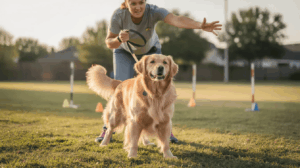
Core Principles for Training Stubborn Dog Breeds
These principles apply to practice at home and to working with a trainer: clear cues, consistent responses, and rewards that matter to your dog.
Clarity: One Command, One Meaning
If “down” sometimes means “lie on the floor” and sometimes means “get off the furniture,” your dog may be unsure what you want. That confusion can affect any breed.
To create clarity:
- Pick one word per behavior. Use “off” for getting off furniture, “down” for lying down, and “place” for going to a mat or cot.
- Start with a consistent hand signal if it helps. Gradually reduce a teaching prompt once your dog understands the verbal cue.
- Give a familiar cue once when your dog is ready to respond. If there’s no response, pause, make the task easier, and help your dog succeed rather than repeating it louder.
- Agree on cues and reward criteria across the household.
Consistency and Structure in Daily Life
Predictable routines and consistent responses can make expectations clearer. Choose practical household rules, teach them in small steps, and reward the behavior you want. A missed repetition is a reason to adjust practice, not evidence that your dog thinks all rules are optional.
Useful examples of daily structure:
- Practice calm door manners. Teach a comfortable pause while the door opens, and use a leash or barrier to prevent bolting. A sit isn’t required if another safe behavior works better.
- Reward loose-leash walking. Mix brief practice with opportunities to sniff rather than requiring a formal heel for an entire walk.
- Teach a mat or cot behavior. Reward going to the mat, then build duration gradually. Simply putting a dog on a cot doesn’t teach impulse control.
- Keep care routines predictable. Include meals, bathroom breaks, rest, and comfortable confinement when appropriate.
Motivation: Finding What Your Dog Will Work For
The reward needs to matter to your dog in the situation you’re practicing. A biscuit that works indoors may be less interesting near a scent trail. If engagement drops, change the reward, lower the difficulty, or take a break.
Specific reward options to try:
- Food rewards: Try small pieces of dog-safe food or training treats your dog enjoys. Account for treats in the daily diet, and follow veterinary advice for allergies or dietary restrictions.
- Tug or fetch: Reward a successful cue with a brief game if your dog enjoys it. Keep play suitable for your dog’s health and surroundings.
- Sniff breaks: For a scent-focused dog, permission to sniff can reward a moment of attention or loose-leash walking. Keep the dog safely leashed.
- Praise or affection: Use these when your dog enjoys them. More enthusiastic praise or touching isn’t automatically more rewarding.
Reserve your highest-value rewards for the hardest situations: recall in the yard, heel past other dogs, holding a “place” command when guests arrive. Immediate rewards reinforce desired behaviors effectively, so timing matters as much as the reward itself.
With clarity, consistency, and proper motivation established, the next step is applying these principles to specific skills and real-world settings.
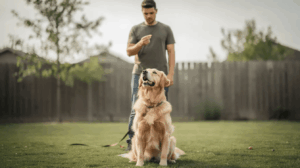
Practical Training Strategies for Stubborn Breeds
Start with a few useful skills, such as sit, down, a mat behavior, loose-leash walking, and recall. Teach each in an easy setting before adding distance or distractions.
Step-by-Step: Teaching Recall (“Come”)
Recall matters for safer handling, but training doesn’t make a dog distraction-proof. Begin in a quiet setting and keep a leash, long line, or secure enclosure in use while you build the skill.
Here’s the progression:
- Start nearby indoors. When your dog is attentive, say “come” once, move a step away, and reward the dog for reaching you. Begin at a distance where success is easy.
- Practice in a secure yard on a long line. Use a well-fitted harness and a line you can handle safely. Keep it clear of legs and obstacles; don’t jerk the dog toward you or wrap the line around your hand.
- Add a mild distraction. Start far enough away that your dog can still respond. If the dog struggles, reduce the distance to you or move farther from the distraction.
- Reward arrival generously. Occasionally release your dog back to a safe activity, so coming to you doesn’t always end the fun. Never punish the dog for returning late.
- Keep safety measures in place. Practice without a line only in a secure, permitted enclosure when appropriate. Use a leash where required and around roads, wildlife, or other hazards.
Mark the behavior you want with a consistent word such as “yes” or a click, then deliver the reward promptly. Teach the marker by pairing it with rewards first. Clear timing helps your dog identify what earned the reward; there isn’t a universal three-second cutoff.
Creating Focus: Short, Manageable Sessions
Keep sessions brief enough that your dog remains comfortable and engaged. A few minutes can be a useful starting point; stop sooner if attention drops. A controlled study of laboratory Beagles found better task acquisition per training session with spaced practice than with more frequent or consecutive sessions, while retention after four weeks was similar. It did not establish a best schedule for every pet dog or show that fewer sessions produce faster results on the calendar.
Here’s a sample mini-session structure:
- Warm up: Reward a couple of easy, familiar behaviors.
- Practice one skill: Work on a small step, such as going to the mat or walking a few steps on a loose leash.
- Take a break: Offer appropriate play, sniffing, or rest.
- Finish while your dog is comfortable: You don’t need to complete a fixed number of repetitions.
For example, a session with a Jack Russell Terrier might include two sits, a hand touch, a few mat repetitions, and a brief tug game. Adjust the plan to the dog’s response rather than trying to fill ten minutes.
Generalizing Commands Across Environments
A dog that responds in the kitchen may need more practice at the park. The cue is familiar, but the surroundings and competing rewards are different. This is a generalization challenge; failure to respond after a context change isn’t, by itself, extinction. In learning terminology, extinction involves a behavior declining when it no longer receives reinforcement.
Follow this 3-stage generalization plan:
- Indoors: Practice in a quiet room, then another room, then near a mild household distraction.
- Controlled outdoors: Move to a secure yard or quiet walking area, with appropriate leash management.
- More challenging settings: Gradually practice near everyday distractions, staying far enough away that your dog can participate comfortably. Check access rules before entering stores or other public spaces.
Make one part of the task harder at a time when possible: distance, duration, or distraction. A new location may introduce several changes at once, so start with easier requests there. If your dog struggles, simplify the task and reward successful practice.
Choosing Training Tools and Understanding Risks
Tools should support learning and management, not replace them. A leash, harness, long line, and reward marker can help you practice safely. Being an independent breed doesn’t establish a need for an electronic collar.
What the Evidence Says About E-Collars
Electronic collars deliver electrical stimulation. Describing that sensation as only a “tap on the shoulder” or equating it with a human TENS treatment can understate potential discomfort and welfare concerns. The American Veterinary Society of Animal Behavior recommends reward-based methods for dog training and behavior modification and advises against aversive methods, including electronic collars.
In a 2020 recall-training study, the reward-focused group responded to more cues on the first request and with shorter response times than the e-collar group. The e-collar group also received food rewards and leash pressure; it wasn’t an “e-collars alone” comparison. The results don’t support claiming that adding an e-collar makes reward-based recall faster or more reliable.
Practical Tools for Home Training
Choose equipment that fits your dog and your setting:
| Tool | Useful role | Important limit |
| Leash and well-fitted harness | Manage movement during walks and practice | Fit and comfort matter; avoid jerking |
| Long line | Practice recall while retaining a physical connection | Needs open space, supervision, and safe line handling |
| Clicker or verbal marker | Identify the behavior that earned a reward | Must be paired with rewards and timed clearly |
| Mat or cot | Provide a consistent target for settling practice | Requires gradual teaching; it doesn’t teach itself |
Off Leash K9 Training Dayton, Ohio lists e-collars in several programs and also offers reward-based marker training. Ask which methods and equipment a proposed program uses, how discomfort or fear is handled, and what owner practice is expected. You can review the current obedience options before choosing a program.
Even with the right tools, owners commonly hit some predictable roadblocks. Let’s address those directly.
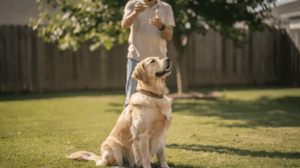
Common Challenges and Solutions in Training Stubborn Dog Breeds
Training can be frustrating when your dog pulls on walks or ignores a familiar cue. Instead of treating it as a personality flaw, identify the circumstances and choose a manageable next step.
Challenge 1: Dog Listens Indoors but Ignores You Outside
Outside, smells, movement, noise, and other dogs can make a familiar cue harder. Your dog may need easier practice, greater distance from distractions, or help with stress.
Solution:
- Practice in a quieter outdoor setting with a leash or safely handled long line.
- Try a reward your dog values there, while keeping the task manageable.
- Move farther from distractions if your dog can’t engage.
- Build difficulty gradually rather than jumping from the living room to a crowded park.
Challenge 2: Power Struggles and “Battle of Wills”
You give a cue, and your dog does something else. It can feel personal, but that doesn’t tell you why the response failed. Check your cue, the task’s difficulty, the available rewards, and your dog’s comfort.
Solution:
- Simplify expectations. If a long down-stay is too difficult, reward a brief, comfortable down and build gradually.
- Teach the household behavior you want before expecting it consistently.
- Stay calm. If either of you is frustrated, pause rather than turning the session into a confrontation.
Challenge 3: Anxiety, Fear, or Shutdown During Training
Some dogs freeze, tuck their tails, move away, or refuse familiar movements because they’re distressed or uncomfortable. A sudden behavior change deserves attention, especially if appetite, movement, or energy has also changed.
Solution:
- Stop the exercise and give the dog space if it appears frightened or overwhelmed.
- Resume only in a setting where the dog can participate comfortably; shorter practice may help.
- Don’t force contact or keep asking for a final successful repetition.
- Consult your veterinarian about sudden changes or possible pain or illness. Ask for qualified behavioral help if fear, aggression, or shutdown persists.
Challenge 4: Multiple People Sending Mixed Signals
One person rewards four paws on the floor while another encourages jumping. One uses “down” for lying down; another uses it for getting off the couch. These mixed signals can make learning harder. Agree on the behavior you want and how you’ll reward it.
Solution:
- Agree on cues, rules, and reward criteria as a household.
- Post a short cue list where everyone can see it.
- Ask the trainer how family members can participate in owner instruction rather than assuming a specific joint lesson is included.
Frequently Asked Questions
What makes a dog breed stubborn?
Breed history can influence what a dog finds interesting or rewarding, but “stubborn” isn’t a precise explanation for behavior. A dog may seem unwilling to listen because of distractions, unclear cues, limited practice, stress, or discomfort. Individual differences matter, even within the same breed.
How do I know if my dog is truly stubborn or just confused?
Responding in a quiet room but struggling outside doesn’t prove your dog is deliberately disobeying. Check whether the cue is consistent, the reward matters in that setting, and you’ve gradually practiced around distractions. Make the task easier and watch for signs of stress or discomfort before assuming stubbornness.
Can all stubborn dog breeds be trained off leash?
No training method can guarantee off-leash reliability for every dog. Suitability depends on the individual dog, training history, surroundings, and risks. Practice recall with a safely handled long line or in a secure enclosure, and follow local leash requirements. An e-collar doesn’t replace physical safety measures.
How long should training sessions be for stubborn dogs?
Start with a few minutes of focused practice and adjust to your dog’s attention and comfort. Five to ten minutes may suit some dogs, while others need shorter sessions. Take a break if your dog becomes distracted, tired, or frustrated rather than trying to complete a fixed amount of time.
What types of rewards work best for motivating stubborn dogs?
Choose rewards your dog enjoys in the setting where you’re practicing. Small pieces of dog-safe food, appropriate tug or fetch games, and leashed sniff breaks can all be useful. Praise or affection works as a reward only when your dog enjoys it. Account for food rewards in the daily diet and follow any veterinary dietary guidance.
When should I seek help from professional dog trainers?
Seek qualified help if training has stalled, you’re struggling to manage your dog safely, or fear, reactivity, or aggression is involved. Consult your veterinarian about sudden behavior changes or possible pain. Ask a trainer about methods, equipment, welfare safeguards, and owner instruction. Professional involvement doesn’t guarantee faster results or eliminate equipment risks.
Conclusion and Next Steps
Dogs labeled stubborn can learn new skills. Progress depends on the individual dog’s health, experiences, motivation, and the situations you’re training for. Focus on clearer communication and safer habits rather than promising perfect obedience.
Here’s your immediate action plan:
- Choose a few core cues and agree on their meanings across the household.
- Plan manageable practice. Use brief sessions and everyday opportunities, adjusting to your dog’s attention and comfort.
- Check your rewards and match them to the setting and difficulty.
- Use suitable management tools, such as a leash, harness, or long line, and learn safe handling.
- Start in an easy environment and increase difficulty gradually.
If you’re near Dayton, Ohio, and want professional guidance, schedule a free phone consultation with Off Leash K9 Training Dayton, Ohio. Discuss your dog’s health, behavior history, and goals, and ask about private lessons and board-and-train options. Confirm the proposed methods, equipment, and owner instruction before enrolling.
For younger dogs, the puppy training options may be a useful starting point. Fear, reactivity, or aggression calls for an individual assessment rather than being dismissed as independence.
Additional Resources
Recommended learning topics:
- Reward markers and clear timing
- Gradual practice around distractions
- Enrichment and safe recall management
- Recognizing stress and choosing a qualified trainer
What to ask during a training consultation:
Explain your dog’s age, health, training history, behavior concerns, and goals. Ask which program is suitable, what methods it uses, what results are realistic, and what practice you’ll need to continue at home. Consultation length and recommendations may vary.
Preparing for Your First Training Session:
Ask the provider what equipment and health records are required. Useful information to prepare includes your dog’s medical concerns, current cues, preferred rewards, and a short list of goals. Bring treats only if appropriate for your dog’s diet and the session.
Would you like a certified trainer to contact you?
PPC Contact Form
"*" indicates required fields
