
Are Golden Retrievers Easy to Train? Strengths and Common Challenges

Golden Retrievers are responsive to training, especially when lessons are clear, rewarding, and consistent. Many enjoy working with people and learning through food, play, or praise. Those qualities can make teaching everyday skills easier, but they do not guarantee effortless obedience.
A Golden who understands sit in the kitchen may still jump on visitors or pull toward another dog. Learning a cue and responding around distractions are different achievements.
Your dog’s temperament, health, experience, and daily routine matter as much as their breed reputation. Understanding those factors helps you set realistic expectations and make training more productive.
Why Many Golden Retrievers Respond Well to Training
A History of Working With People
Golden Retrievers developed as sporting dogs that worked alongside handlers. That cooperative background helps explain their reputation for trainability, although individual dogs vary in motivation and confidence.
The American Kennel Club’s Golden Retriever training guide describes training priorities across developmental stages. Treat those stages as guidance rather than deadlines your dog must meet.
Rewards Can Make Learning Clear
Many Goldens enjoy food, toys, and social interaction. These preferences give you useful ways to reinforce behavior you want repeated.
For example, reward your dog for checking in during a walk or keeping four paws down when someone approaches. Discover what your dog values instead of assuming praise or a particular treat will always be enough.
What Can Make Golden Retriever Training Difficult?
Excitement Around People and Dogs
A sociable dog may find a visitor or passing dog more interesting than a cue. That does not automatically mean stubbornness. The situation may simply exceed the level of distraction your dog has practiced successfully.
Create distance, lower the difficulty, and reward attention before moving closer. Friendly intentions do not make rushing toward strangers safe or welcome.
Mouthing, Chewing, and Carrying Objects
Puppies explore with their mouths, and Goldens may enjoy carrying things. Provide suitable toys and supervise access to shoes, clothing, and other tempting objects.
Teach exchanges using appropriate rewards rather than repeatedly grabbing items. If your dog stiffens, growls, or guards possessions, seek individualized guidance instead of assuming this is ordinary puppy play.
Changes During Adolescence
Growing dogs can become more distractible, and skills may seem less reliable in exciting environments. Return to easier practice and maintain consistent routines.
Maturity does not automatically resolve jumping, pulling, or unreliable recall. Training continues through adulthood, and there is no universal age when every Golden becomes fully trained.
Practical Ways to Make Training Easier
Teach One Clear Behavior at a Time
Choose a specific goal, such as standing calmly while a guest enters. Reward that behavior before expecting a longer or more demanding response.
Use the same cue across family members. Avoid repeatedly saying sit when your dog has not learned what the word means in that setting. Demonstrate or simplify the task, then reward success.
Use Rewards With Good Timing
Mark the desired behavior with a consistent word or clicker, then deliver a reward. Keep practice short enough that your dog stays comfortable and interested.
The American Veterinary Society of Animal Behavior recommends reward-based training. This approach can include clear boundaries, routines, and management; it does not mean allowing unwanted behavior.
For greetings, use a leash or barrier to prevent jumping while rewarding calm behavior. Give guests simple instructions so excitement does not accidentally earn attention.
Increase Difficulty Gradually
Start in a quiet space, then practice in another room or a calm outdoor area. Add distance, duration, or distraction separately rather than increasing everything together.
If your Golden cannot respond near another dog, move farther away. Reward attention and rebuild the skill at a manageable distance.
Use a leash or long line for recall practice where appropriate. Follow local leash rules and avoid testing an unfinished recall near roads, wildlife, or unfamiliar dogs.
Balance Activity With Rest
Suitable walks, sniffing, play, and enrichment can support a manageable routine. Exercise needs vary with age, health, and fitness; ask your veterinarian about appropriate activity for your dog.
Do not rely on exhausting your Golden before every lesson. Rest and emotional comfort matter, and excessive excitement can make learning harder.

When Professional Training Can Help
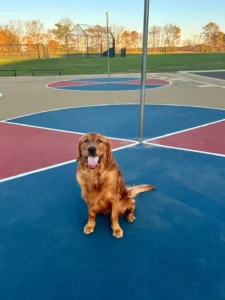
Golden Retrievers in Dayton, Ohio, can benefit from professional training when excitement, jumping, or unreliable recall becomes difficult to manage. For example, Hank, a seven-month-old Golden Retriever in Dayton, began training to improve his recall, listening skills, and everyday puppy manners. His story shows why consistent practice and training around distractions matter, even for intelligent, friendly dogs.
A trainer can help identify unclear cues, inconsistent rewards, and situations that are too difficult. Useful goals include calmer greetings, leash manners, and responding reliably in everyday settings.
Dayton owners can explore puppy training for early foundations or dog obedience training for growing skills. Review training programs and pricing and ask about methods, eligibility, owner practice, and follow-up.
Sudden behavior changes or suspected pain deserve veterinary assessment. Fear, aggression, and separation distress require individualized plans rather than promises based on breed. Professional training also requires owner participation; a program cannot replace consistent practice afterward.
Frequently Asked Questions
Are Golden Retrievers Good for First-Time Owners?
They can suit first-time owners who can provide training, grooming, activity, and companionship. Their friendly reputation does not remove the responsibility of supervising interactions and teaching everyday manners.
Are Golden Retrievers Easy to Potty Train?
Many learn bathroom routines with frequent opportunities, supervision, and rewards immediately after outdoor elimination. Progress varies, and new accidents or discomfort should not automatically be treated as training failures.
Why Does My Golden Listen at Home but Ignore Me Outside?
Outdoor distractions may be harder than the situations your dog has practiced. Increase distance from distractions, simplify the task, and reward successful responses before raising difficulty.
Are Male or Female Golden Retrievers Easier to Train?
Sex alone does not reliably predict how easy your individual dog will be to train. Temperament, health, experience, motivation, and consistent teaching provide more useful information.
Can an Adult Golden Retriever Still Learn?
Yes, adult Goldens can learn new cues and improve existing habits. Adjust training to their health and experience rather than assuming puppyhood was their only opportunity.
Build a Plan for Your Golden
Choose one behavior to improve and track small successes. Contact the Dayton team to discuss training options suited to your dog’s needs.
Would you like a certified trainer to contact you?
PPC Contact Form
"*" indicates required fields
