
Why Do Dogs Hump? 5 Shocking Reasons and Powerful Training Solutions!

Dogs hump legs, other dogs, pillows, and sometimes nothing at all. The behavior can be embarrassing, but mounting is a normal canine behavior that can occur in several contexts. Understanding why dogs hump helps you decide whether to leave it alone, redirect it, or seek professional help.
Dogs hump for multiple reasons: sexual motivation, play, excitement, stress, learned habits, attention-seeking, and sometimes medical discomfort. Mounting alone doesn’t prove dominance. UC Davis veterinary behavior guidance emphasizes looking beyond that assumption to the dog’s context and health.
This article is for pet owners whose dogs mount people, other dogs, or objects and who want practical, humane solutions. For owners near Dayton, Ohio, dog obedience training may help teach alternative behaviors and handling skills. Medical problems, aggression, or suspected compulsive behavior need appropriate assessment rather than an obedience-only solution.
Here is what you will learn:
- Possible reasons for humping and when it becomes concerning
- What the context can tell you, without diagnosing the cause from one behavior
- A practical management plan using rewards and taught alternative behaviors
- When to contact your veterinarian or seek qualified behavioral help
Understanding Dog Humping Behavior
Humping, also called mounting, involves straddling or thrusting against another dog, a person, or an object. Some dogs make similar movements without a visible target. Male and female dogs can mount, including dogs that are spayed or neutered.
Mounting isn’t always sexual. It can occur during play, excitement, stress, or as a learned behavior. Look at the surroundings and your dog’s body language rather than treating it as a character flaw.
Sexual and Hormonal Drives
Sex hormones can contribute to mounting in intact dogs, especially around a female dog’s heat cycle. Sexual maturity and heat-cycle timing vary, so a fixed age range or schedule doesn’t explain every dog. Ask your veterinarian if you have questions about your dog’s reproductive development.
Spaying or neutering may reduce sexually motivated mounting, but it doesn’t reliably eliminate behavior related to play, stress, or learned habits. VCA explains that altered dogs can still mount. Discuss the timing and suitability of surgery with your veterinarian rather than choosing it solely as a humping treatment.
Play, Social Interaction, and Learning
Puppies may mount during play, and adult dogs can do it too. Mounting during a playful interaction doesn’t automatically mean sexual interest, but the other dog’s response still matters.
Loose bodies, breaks in play, and both dogs choosing to reengage can suggest a relaxed interaction. Still, don’t assume mounting is welcome because it happens during play. Interrupt if one dog stiffens, moves away, or is repeatedly targeted.
Mounting can also become a learned habit. If it repeatedly brings attention or feels rewarding to the dog, the behavior may continue after the original situation has changed.
Emotional Arousal: Excitement, Stress, and Frustration
Visitors, running children, a doorbell, or intense play can leave a dog excited or overwhelmed. Some dogs respond to that arousal by mounting a nearby person, dog, or object.
Frustration produces similar results. A dog that cannot reach another dog through a fence, or cannot get a toy stuck under the couch, may redirect that frustration into mounting the nearest available target.
Stress or anxiety can also be involved. A dog may mount during a situation it finds difficult, but the behavior alone doesn’t establish anxiety or a compulsive disorder. Watch for patterns, other signs of distress, and whether the behavior interferes with normal activities.
Once you understand these motives, it becomes easier to decide when to interrupt, when to ignore, and when to seek help.

Specific Reasons Dogs Hump (And How to Recognize Each)
The same action can occur for different reasons. Note what happens before, during, and after an episode: who is present, what changes, how the dog behaves, and what follows the mounting. A brief log can help you and your veterinarian or trainer recognize patterns.
Humping Other Dogs
Mounting may occur during playdates, daycare, or dog-park interactions. Watch both dogs: relaxed movement and voluntary breaks are different from repeated mounting of a dog that is trying to leave.
Interrupt the interaction if one dog repeatedly targets another, the other dog tries to escape, or either dog becomes stiff or growls. End the play session if calm redirection doesn’t work. Don’t grab collars or pull dogs apart if that could put you at risk of a bite; seek qualified help for unsafe interactions. A different park doesn’t solve persistent unwanted mounting.
Humping People (Legs, Arms, Laps)
Dogs may mount people when excited or seeking interaction. Yelling, pushing, or laughing can sometimes provide attention or add excitement. Step away when safe, interrupt early with a familiar cue, and reward an alternative behavior before mounting starts.
Mounting can knock a child or visitor off balance. Use supervision and physical separation, such as a gate, to prevent unwanted contact. Don’t ask children to manage or physically remove a mounting dog.
Humping Objects, Toys, and “Air Humping”
Many dogs mount a favorite pillow, blanket, or toy; some also hump the air. Object mounting can involve sexual pleasure, excitement, stress, or habit. The target alone doesn’t identify the cause.
Brief object mounting may not require intervention if it causes no injury, distress, or disruption and is easy to interrupt. Sudden changes, persistent genital licking, redness, swelling, or urinary problems call for veterinary advice. There isn’t a daily episode count that proves the behavior is harmless.
Does Humping Mean Dominance?
Don’t use mounting as a shortcut for labeling a dog “dominant.” Social interactions are complex, and stress, excitement, sexual motivation, or learning may be involved. Body language can tell you that an interaction is uncomfortable, but it doesn’t reliably establish a status motive.
Whatever the cause, the immediate priorities are preventing injury, reducing distress, and teaching a comfortable alternative.
Practical Ways to Reduce Unwanted Humping
A useful plan combines management, which limits unwanted opportunities, with training, which teaches behaviors your dog can perform instead. Start with the cause and setting rather than assuming every dog needs the same program.
Step-by-Step Training and Management Plan
Use reward-based teaching and calm management. Avoid yelling, hitting, or physical corrections. The American Veterinary Society of Animal Behavior recommends reward-based methods and advises against aversive methods, including electronic collars. Professional involvement doesn’t eliminate those welfare risks.
- Observe and log triggers. Record the setting, what happened beforehand, how long the behavior lasted, and what followed. A week can be a useful starting point, but don’t delay help for pain or safety concerns.
- Prevent predictable episodes. Before visitors arrive or play becomes intense, use a comfortable separate space or supervised barrier. Give your dog an appropriate activity and room to settle.
- Interrupt early when safe. Use a cue your dog already knows, such as recall or “leave it.” If your dog can’t respond, reduce stimulation rather than repeating the cue louder.
- Reward an alternative. Practice sitting, going to a mat, or calmly approaching you in an easy setting first. Reward these behaviors promptly, especially before mounting starts. Avoid making humping the required first step in a treat routine.
- Review the daily routine. Provide suitable exercise, sniffing, rest, and supervised enrichment. Adjust activities to your dog’s age and health; more vigorous play may increase excitement rather than help the dog settle.
- Get help when needed. Contact your veterinarian for new, excessive, or uncomfortable mounting. Seek qualified behavioral help if the behavior persists, causes conflict, or is difficult to interrupt. You don’t need to wait four to six weeks when welfare or safety is affected.
Home Management or Professional Help?
| Situation | Appropriate next step |
| Occasional mounting without injury or distress | Observe context and redirect if unwanted |
| Predictable mounting during greetings or play | Prevent opportunities and reward a taught alternative |
| Sudden change, genital irritation, or urinary signs | Contact your veterinarian |
| Persistent mounting, distress, conflict, or bite risk | Veterinary assessment and qualified behavioral support |
For owners near Dayton, Ohio, review the available training programs and ask how owner instruction and ongoing practice are included. Obedience support may be useful, but program length isn’t a promise that mounting, anxiety, or aggression will be resolved.
If mounting is new, excessive, painful, or accompanied by physical changes, arrange veterinary assessment. Safe management can prevent unwanted contact while you seek advice.
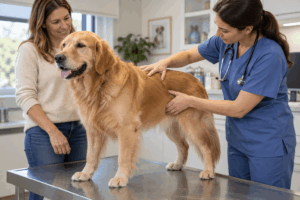
When Humping Is a Problem: Red Flags and Underlying Issues
Not all humping needs to be stopped. The key questions are whether anyone is uncomfortable, whether there is injury or distress, and whether the behavior interferes with daily life. Sudden changes deserve attention.
Medical Causes to Rule Out
Medical discomfort can affect mounting behavior. Your veterinarian may consider conditions such as:
- Urinary problems: Changes in urination, straining, accidents, or genital licking need assessment.
- Skin irritation or allergies: Itching, redness, or excessive licking may accompany mounting.
- Persistent erection or genital swelling: These require veterinary attention rather than training corrections.
The ASPCA’s mounting guidance explains why medical causes should be considered when mounting becomes excessive or is accompanied by genital licking.
Schedule a veterinary visit for sudden or persistent changes, discomfort, or visible irritation. Seek urgent veterinary care if your dog cannot pass urine or its penis remains exposed and cannot retract, especially with swelling or pain. Merck Veterinary Manual identifies inability to retract the penis as a medical emergency. Don’t attempt forceful manipulation or assume obedience training will resolve the problem.
Compulsive or Excessive Humping
Mounting that is hard to interrupt, causes injury or distress, or displaces eating, resting, and other normal activities needs assessment. Frequency alone doesn’t diagnose a compulsive disorder.
A veterinarian can assess medical causes and whether a veterinary behaviorist is needed. A treatment plan may involve environmental changes, behavior modification, and medication when appropriate. A short board-and-train program isn’t a substitute for that assessment.
Social and Safety Concerns
Repeated unwanted mounting can provoke conflict between dogs or injure people. Pause dog-park visits or uncontrolled play if these settings repeatedly lead to mounting, and use supervision and separation to protect children and guests.
If your dog stiffens, growls, or may bite when interrupted, don’t physically confront it. Prevent access to likely targets and seek qualified professional help. The priority is a safe plan, not forcing compliance.
Conclusion and Next Steps
Dogs hump for reasons ranging from sexual motivation and play to stress, learned habits, and medical discomfort. Context helps you choose the next step, but it doesn’t establish a diagnosis. Reward-based training and management can support alternative behaviors; physical symptoms or unsafe interactions need appropriate professional assessment.
Here are concrete next steps:
- Keep a brief log of the setting, behavior, and response.
- Contact your veterinarian for sudden changes, irritation, urinary problems, or distress.
- Teach useful alternatives such as sit, recall, and going to a mat in calm settings.
- Prevent predictable episodes and reward alternatives before mounting begins.
- If you’re near Dayton, Ohio, schedule a free phone consultation to discuss suitable training options and owner participation.
Practicing calm greetings and a comfortable mat behavior gives your dog alternatives during exciting moments. Continue management while these skills are developing rather than expecting obedience to resolve every underlying cause.
Frequently Asked Questions
Is it normal for my spayed or neutered dog to hump?
Yes. Spayed and neutered dogs can mount during play, excitement, stress, or for sexual pleasure. Surgery doesn’t remove every motivation. Brief behavior without injury or distress may not need intervention, but sudden changes, discomfort, or persistent mounting warrant veterinary advice.
Will neutering or spaying stop my dog from humping?
Spaying or neutering may reduce sexually motivated mounting, but it doesn’t guarantee the behavior will stop. Learned habits and nonsexual causes may remain. Discuss surgery and its timing with your veterinarian based on your dog’s individual health and circumstances.
Should I punish my dog for humping?
Avoid yelling, hitting, or harsh corrections. Interrupt safely, reduce the trigger when possible, and reward a behavior your dog has already learned. If interruption could provoke aggression, use prevention and seek qualified help rather than physically removing the dog.
When should I seek professional training help?
Clear indicators that home management is not enough:
- Mounting causes conflict or makes people or animals uncomfortable.
- You cannot safely interrupt or prevent it.
- The behavior is persistent, difficult to redirect, or accompanied by distress.
- Household members need help using consistent cues and management.
For Dayton-area owners, Off Leash K9 Training offers a free phone consultation about available programs. Ask which methods, equipment, and owner instruction are included. Puppy training options may help build foundation skills, but persistent mounting still requires attention to its cause.
Would you like a certified trainer to contact you?
PPC Contact Form
"*" indicates required fields
