

The holiday season fills our homes with laughter, lights, and delicious aromas. But while these festivities bring joy to us, they can also pose serious risks for our dogs. From rich holiday foods to twinkling decorations, what seems harmless to humans can become a hazard for pets.
As professional trainers, we’ve seen how small oversights can lead to big problems. By learning what to watch for, you can prevent accidents and make the season merry and safe for everyone.
Common Holiday Food Dangers
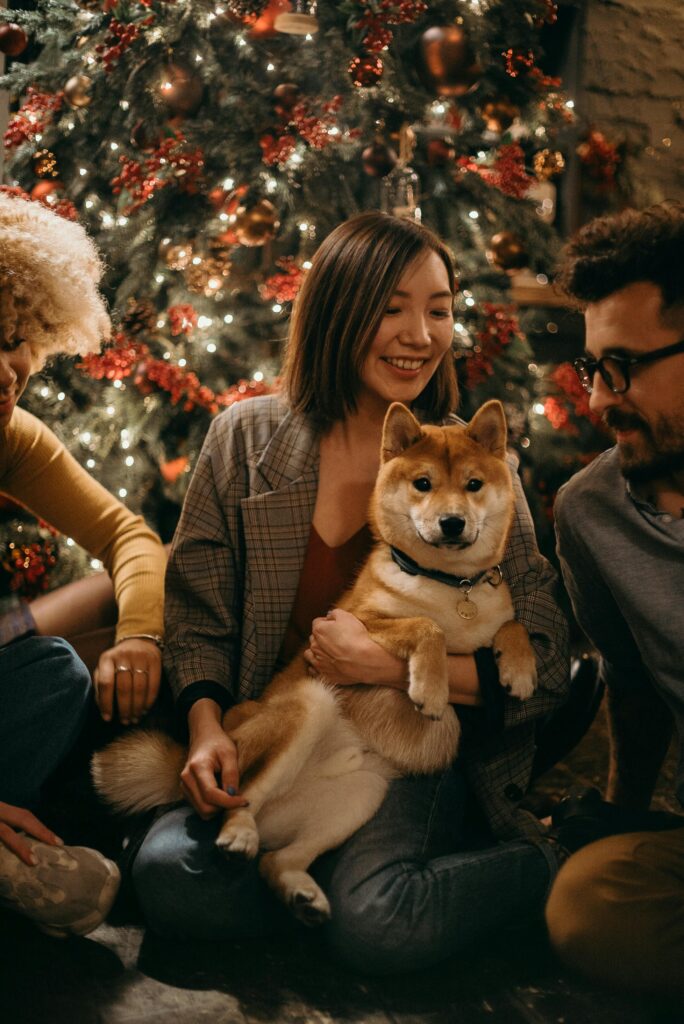
Holiday feasts are irresistible to dogs. Unfortunately, many traditional dishes can upset their stomachs or even be toxic.
Foods to avoid:
- Chocolate and desserts with xylitol
- Turkey bones or fatty skin
- Stuffing with onions, garlic, or sage
- Grapes, raisins, or fruitcake
- Alcohol or foods cooked in alcohol
- Leftover gravy or buttery sauces
Even a small taste can lead to digestive issues or worse. Instead, treat your dog with plain, cooked turkey, green beans, or pumpkin puree in moderation.
For more details, check the AKC’s guide to Thanksgiving foods for dogs, which also applies to the rest of the holiday season.
Keep Decorations Dog-Proof
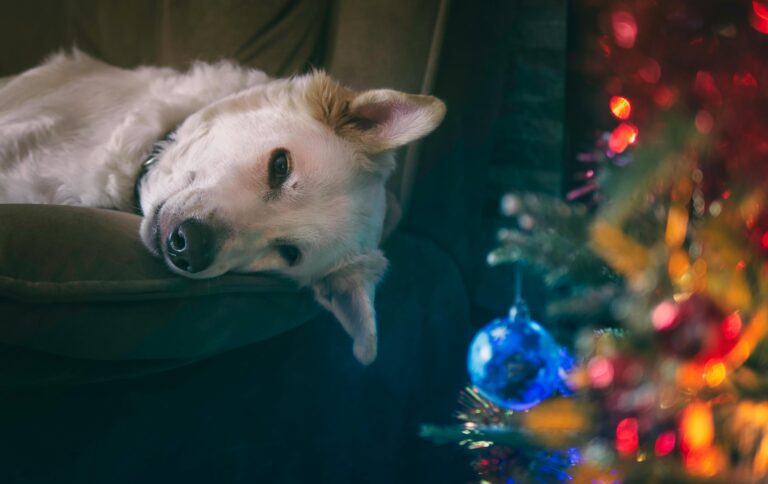
From sparkling ornaments to scented candles, decorations can tempt curious noses and paws. While they make your home beautiful, they can also create unexpected dangers.
Watch out for:
- Tinsel and ribbons: These can cause internal blockages if swallowed.
- Glass ornaments: Fragile decorations can break and cut paws.
- Lights and cords: Dogs may chew on wires, risking burns or electric shock.
- Candles and potpourri: Scents attract dogs but can be toxic or cause burns.
- Tree water: Additives for keeping trees fresh can make dogs sick.
Keep breakable or tempting items higher up and supervise your dog when the tree is accessible.
The Stress Factor
Even the friendliest dogs can feel overwhelmed by visitors, noise, and routine changes. Anxiety may show as pacing, hiding, or chewing.
Create a quiet retreat space for your dog away from the excitement. A crate, gated room, or a calm “place” mat can help them decompress. Our Basic Obedience Program is ideal for teaching impulse control and calm behavior, even during chaotic times.
Explore our Basic Obedience Program
Checklist: Holiday Dog Safety
Before you hang another ornament or start baking, review this safety checklist:
- Keep toxic foods out of reach
- Secure or unplug electrical cords
- Avoid giving table scraps
- Supervise dogs near trees and candles
- Store gifts containing food in closed rooms
- Provide your dog a calm, quiet resting area
- Stick to consistent feeding and walking times
Preparation prevents problems and ensures your dog enjoys the season safely.
Internal Enrichment During Winter
Cold weather and busy schedules can reduce outdoor activity, but dogs still need mental and physical stimulation. Puzzle toys, training games, and short obedience sessions can burn energy indoors.
Our post on unlocking your dog’s potential through game-based learning shares creative ways to make training fun and mentally rewarding for your pup.
Expert Resource: Training With Rewards
The AKC’s guide to training with rewards highlights how positive reinforcement strengthens obedience and reduces stress, which is especially helpful during the excitement of the holidays.
FAQ: Holiday Hazards for Dogs
Q: Can dogs eat small amounts of holiday leftovers?
A: Stick to dog-safe foods only, like plain turkey or pumpkin puree. Avoid sauces, bones, and spices.
Q: What should I do if my dog eats chocolate or onions?
A: Contact your vet immediately. Even small amounts can cause toxicity.
Q: How can I stop my dog from getting into decorations?
A: Use barriers like baby gates and practice commands such as “leave it” and “place” for safety.
Q: Are poinsettias and mistletoe dangerous to dogs?
A: Yes. Both can cause vomiting and irritation if ingested. Keep all holiday plants out of reach.
Q: How can I help my anxious dog relax during holiday gatherings?
A: Maintain structure. Use crate training or the “place” command for calm behavior and reward relaxation.
Final Thoughts
The holidays should be joyful for everyone, including your dog. With a bit of planning, structure, and awareness, you can prevent accidents and give your pup a stress-free celebration.
Keep your dog’s training sharp, routines steady, and environment safe. A calm and obedient dog makes for a truly happy holiday season.
Contact Off Leash K9 Training Dayton today to start building obedience that lasts well beyond the holidays.