
Dog Whining in Crate: Causes, Fixes, and When to Call a Trainer
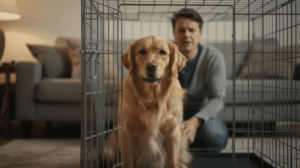
A dog whining in the crate can be one of the most exhausting challenges pet parents face. Whether it’s a new puppy crying at 2 a.m. or an adult dog barking and pacing every time you leave the room, the sound wears on your patience, your sleep, and sometimes your relationship with your neighbors. If you’re in the greater Dayton area, including Kettering or Beavercreek, you’re not alone in dealing with this.
The direct answer: Check bathroom needs, comfort, and signs of distress before deciding how to respond. Gradual crate training can help a dog become more comfortable, but there is no guaranteed timeline. Panicked or escalating whining needs attention; do not leave a distressed dog confined while waiting for silence.
This article focuses on healthy dogs and puppies whining or crying in wire or plastic crates at home, during both daytime and nighttime crate time. It does not cover medical emergencies or airline/travel crate issues. If your dog is in obvious physical pain, contact your veterinarian first.
What you can do tonight:
- Take your dog out for a potty break right before crating.
- Provide age-appropriate activity, then allow time to wind down.
- Check whining for bathroom needs, discomfort, or distress.
- Offer an appropriately sized food toy only after supervised use shows your dog can use it safely.
By the end of this article, you will:
- Understand common reasons your dog may whine in the crate.
- Have a step-by-step plan for building crate comfort.
- Recognize signs that need veterinary or behavior support.
- Learn about puppy training resources available to Dayton-area owners.
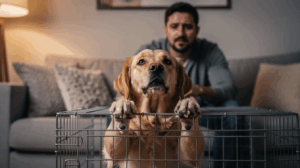
Understanding Dog Whining in the Crate
Crate whining is a vocalization that happens while a dog is confined in a crate. Crying, barking, and howling can occur in the same setting. The sound alone does not tell you why the dog is uncomfortable.
The first thing to understand: whining is communication, not spite. Your dog is not “being stubborn” or “trying to punish you.” Dogs whine in the crate because they are bored, lonely, afraid, anxious, or need to go outside. Reading the context of the whining—when it starts, how long it lasts, what body language accompanies it—prevents mislabeling the behavior and choosing the wrong response.
Normal Protest vs. Problem Behavior
Brief, soft whining can occur while a puppy or recently adopted dog adjusts to a crate. Look at the whole picture: relaxed body language, willingness to eat, and the ability to settle are more useful observations than a fixed number of minutes. Quietness alone does not prove that a dog feels comfortable.
Whining that escalates or comes with trembling, heavy panting, excessive drooling, or frantic escape attempts needs attention right away. Don’t wait for it to continue for 20–30 minutes before responding.
Here are illustrative patterns to watch for, rather than diagnostic rules:
- More reassuring: Your dog briefly whines, remains relaxed, and then rests comfortably.
- Needs a check: Your puppy wakes and cries after sleeping; offer a quiet potty trip.
- Concerning: Your dog howls, pants heavily, and repeatedly digs at the crate when you leave.
- Concerning: Your dog trembles, drools, or bites the bars even while you remain nearby.
Physical vs. Emotional Causes
Physical drivers of whining include a full bladder or bowels, being too hot or cold, hunger, thirst, or pain. Joint discomfort or another health problem can make lying down uncomfortable. New whining or changes in movement, appetite, or bathroom habits warrant a veterinary check.
Emotional drivers include fear of confinement, separation distress, frustration, and boredom. A dog may also struggle because the crate was introduced too quickly or has become associated only with being left alone.
Understanding the cause helps you choose a useful response. You can reward quiet, relaxed behavior without ignoring bathroom needs or fear. Run through this quick checklist when you hear whining:
- When did my dog last go potty?
- How long has the dog been in the crate?
- Did we do any exercise or mental stimulation today?
- Is the crate environment comfortable—temperature, bedding, noise level, location?
- Did I leave the room or the house right before the whining started?
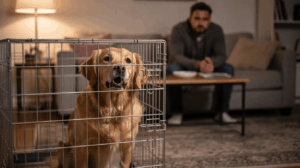
Common Reasons Dogs Whine in the Crate
Now that you understand whining is communication, let’s look at common causes. Matching your dog’s pattern and body language to possible causes helps you decide what to check first.
Bathroom Needs and Young Puppy Schedules
Young puppies need frequent bathroom opportunities, especially after waking, eating, drinking, or playing. Age is only one factor; health, activity, and individual development also matter. Do not treat an age-based holding estimate as a required waiting period. Track your puppy’s actual needs and arrange breaks before accidents occur.
Clues that your dog may need a bathroom break include waking and crying, restlessness, and eliminating promptly outside. These clues are helpful but not definitive; a recent potty trip does not rule out pain, fear, or another need.
Build the nighttime routine around these steps:
- Offer a final potty trip before bedtime.
- Keep the crate nearby so you can hear your puppy waking.
- Plan overnight checks based on your puppy’s recent bathroom pattern.
- Respond sooner if your puppy wakes and signals a need.
- Keep overnight trips quiet, with little interaction and no play.
Ignoring genuine potty signals can lead to crate accidents and interfere with house training. Never withhold water simply to make your dog last longer in the crate; ask your veterinarian about any medically necessary changes.
Excess Energy and Lack of Stimulation
Crates are meant for rest, not storage of unused energy. Dogs may struggle to settle when they haven’t had enough appropriate physical activity or mental stimulation. Exercise can support a comfortable routine, but exhaustion does not treat anxiety.
Choose walks, play, and enrichment that fit your dog’s age, health, and activity needs. For puppies, short play sessions and brief reward-based training often fit better than long walks. Dayton owners can review available obedience training options for help with general skills.
A short, enjoyable training session before rest may suit some dogs. Keep it easy and allow time to wind down; avoid turning every crate entry into a demanding obedience test.
Separation Anxiety and Confinement Stress
Separation-related distress occurs when a dog struggles with being apart from people. Confinement distress occurs when restriction itself is difficult, including when an owner stays nearby. The two can overlap, but whining alone does not establish either diagnosis. VCA’s separation-anxiety guidance explains how to assess the triggers.
Concerning signs include persistent vocalization, heavy panting, drooling, trembling, destructive escape attempts, or self-injury. Record a short video if you can do so safely; it can help your veterinarian or behavior professional assess the pattern.
Some dogs associate crates with stressful experiences, but adoption status or breed does not tell you why an individual dog is whining. Avoid using the crate as punishment, and rebuild comfort through gradual, positive experiences.
This is a red-flag situation. DIY approaches can backfire with true separation anxiety, and professional behavior help is often needed.
Environmental and Setup Issues
Crate location, temperature, and nearby activity can affect comfort. A noisy hallway or busy window may keep your dog alert. Try a quieter location near you and observe whether it helps, rather than assuming a particular setup will stop the whining.
Common crate setup mistakes:
- Too small: Your dog cannot stand normally, turn around, and lie down comfortably.
- Excess space during house training: Some puppies may eliminate at one end and sleep at the other; a divider can help while preserving adequate room.
- Unsafe bedding or toys: Your dog tears off and swallows pieces.
- Poor ventilation or temperature: The crate becomes hot, stuffy, or uncomfortable.
Nighttime setup example: Place an uncovered, well-ventilated crate near your bed while your dog adjusts. Daytime setup: Choose a comfortable area away from heavy traffic, with supervised practice before longer stays. Remove collars and harnesses before unattended crating to reduce snagging risk. The AKC crate-training guide also advises removing collars in the crate.
Inconsistent Training and Accidental Reinforcement
Your response can influence learned behavior, but it should not override your dog’s needs. If the whining is mild, your dog is relaxed, and you have ruled out immediate needs, opening the door during a brief quiet pause can reinforce calm behavior.
If you keep reaching the point where your dog cries for release, shorten the next session. Aim to finish while your dog is still comfortable rather than repeatedly testing how long they will whine.
Agree on a shared plan for potty checks, rewards, and signs that mean the session should end. Consistency should mean meeting needs predictably, not leaving a frightened dog to cry.
How to Stop Dog Whining in the Crate: Practical Strategies
Gradual practice, positive associations, and a routine that meets physical needs can help build crate comfort. The following plan is for dogs who remain relaxed during practice; dogs showing panic need an individualized assessment first.
Step-by-Step Crate Training Plan
Image 1 placement: Owner offering a treat beside a dog at an open crate.
Puppies and adult dogs can learn crate skills. Start with sessions short enough that your dog stays comfortable, and progress according to behavior rather than a deadline.
- Introduce the crate with the door open. Toss treats near and inside it, and let your dog explore at their own pace. Secure the door so it cannot swing shut. Never push your dog inside.
- Build positive associations. Offer meals near the entrance, then farther inside as your dog becomes comfortable. Keep the door open initially.
- Practice brief door closures. Start with a moment your dog can tolerate while you sit nearby. Reopen before discomfort develops, and reward relaxed behavior.
- Increase one challenge at a time. Add a little duration or distance, rather than changing both together. If whining or tension increases, make the next repetition easier.
- Practice brief absences. Return before your dog becomes distressed. A camera can help you monitor body language.
- Generalize gradually. Practice at different appropriate times and with mild household activity only after the easier version is comfortable. Continue providing potty breaks and time outside the crate.
Progress signs: Your dog enters willingly, rests with relaxed body language, and tolerates small increases without escalating distress. If those signs are missing, reduce the difficulty and ask for help.
Setting Up a Comfortable Crate Routine
Predictable daily structure is the foundation. Dogs thrive on routine—consistent times for feeding, walks, training, and crate time reduce uncertainty and help your puppy learn what to expect.
For a weekday routine, arrange care around your puppy’s actual needs:
- Morning: Potty break, appropriate activity, breakfast, and a brief crate practice session.
- During the workday: Arrange frequent potty opportunities, companionship, play, and rest with a family member, sitter, or other suitable care.
- Afternoon and evening: Provide time outside the crate, meals, and relaxed interaction.
- Bedtime: Offer a final potty trip and use an overnight plan suited to your puppy.
A puppy should not spend a full workday in a crate and then another long stretch there overnight. A gated, puppy-proofed area may be useful if your puppy is comfortable and safe there.
Pre-crate rituals matter. Potty, short training, light play, and then a calm transition—not chaotic, hyped-up play right before putting the dog in the crate. When the pup is winding down, crating feels natural rather than punitive.
Keep a simple seven-day log of crate times, bathroom trips, whining, and body language. Look for patterns to discuss with a professional; the log is an observation tool, not a promise of improvement within a week.
How Much Crate Time Is Appropriate?
Crate duration depends on your dog’s bathroom needs and ability to remain comfortable. Humane World for Animals advises that puppies under six months should not remain crated longer than three or four hours at a time; younger puppies may need much shorter periods. That is an upper guideline, not a target to work toward regardless of distress. Adult dogs also need breaks, exercise, and companionship. Arrange a sitter or another safe care option when your schedule exceeds what your dog can manage.
Tools, Comfort Items, and Calming Strategies
Comfort items can support training when they are safe for your individual dog:
- Bedding: Use washable bedding only if your dog does not chew or swallow it. A durable mat can also be damaged, so inspect it and remove it if necessary.
- Enrichment: Try an appropriately sized food toy under supervision first. Do not leave loose chews or lick mats unattended if your dog could shred, swallow, or choke on them.
- Sound: Low-volume white noise or gentle music may reduce distracting sounds for some dogs. Keep cords out of reach.
- Crate covers: A partial cover may suit some dogs but can worsen discomfort for others. Preserve airflow, prevent fabric from being pulled inside, and remove it if your dog seems hotter or more distressed.
Comfort items support gradual training; they do not replace meeting physical needs or getting help for distress.
Using Obedience and Place Training to Support Crate Calmness
Reward-based obedience and settling exercises can add useful structure to daily life. They do not, by themselves, prevent anxiety or prove that a dog is comfortable in a crate.
Teaching your dog to settle on a bed outside the crate gives you another place to practice relaxed behavior. Reward comfortable resting near you and build duration gradually; a down-stay outside the crate does not establish readiness for confinement.
The Dayton puppy training page lists an Online Puppy Training Course that includes crate training. Ask the team which current option fits your dog’s needs.
Simple daily mini-routine: Practice a few easy settling repetitions, offer a potty opportunity, and then invite your dog into the crate for a session they can handle comfortably. Adjust the sequence if it makes your dog more alert or uneasy.
Comparing Different Response Strategies to Whining
There are three main response styles pet parents use when their dog whines in the crate, and they produce very different outcomes:
Always ignoring whining. This can overlook bathroom needs, pain, or fear. Briefly observing mild whining may be reasonable when your dog remains relaxed, but escalating distress needs a response.
Always treating whining as a request for release. This does not tell you why the dog is whining. Check the cause, and use shorter sessions that let you reward comfort before crying starts. Responding to fear or an urgent need is appropriate.
Respond to needs and reward calm. Check physical needs, watch body language, and reward relaxed behavior. If your dog is comfortable, finish during a quiet moment when possible. If distress develops, end the session safely and adjust the plan.
This approach combines predictable care with gradual practice and attention to your dog’s emotional state.
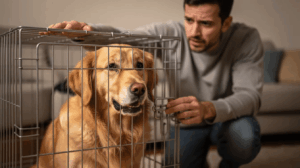
Common Crate Whining Challenges and How to Fix Them
Here are common crate-whining patterns and practical ways to respond.
Dog Whining in Crate at Night
Image 3 placement: Puppy resting in a crate beside the owner’s bed.
The typical pattern: the dog is quiet at first, then starts whining in the middle of the night, and the owner lies in bed unsure whether it’s a potty need or protest.
Decision framework:
- If your puppy wakes and cries, offer a calm potty trip rather than waiting for a minimum number of hours.
- If an adult dog starts whining unexpectedly, check bathroom needs, comfort, and possible pain even after a recent walk.
- If whining escalates to trembling, heavy panting, or frantic escape attempts, end confinement safely and seek professional guidance.
Nighttime tips: Keep the crate near you initially. Plan potty checks from your puppy’s recent pattern and respond sooner when needed. Keep overnight trips calm and return to the crate only if your puppy can settle comfortably.
Dog Whines as Soon as You Leave the Room
Whining as you leave can reflect incomplete alone-time training, frustration, or separation-related distress. Watch what changes when you move away and whether the dog is comfortable outside the crate.
Gradual desensitization plan:
- Start with whatever separation your dog can handle calmly, even a step away for a moment.
- Return before distress begins; do not stay away waiting for silence after panic develops.
- Use rewards or a food toy if your dog can enjoy them safely. Refusing food can be one clue that the exercise is too difficult.
- Increase duration in small, flexible steps only when the current version is comfortable.
- If your dog cannot tolerate a brief separation, stop the exercises and consult your veterinarian or a qualified behavior professional.
Rescue Dog or Older Dog Whining in Crate
An adopted dog may have unfamiliar routines or previous stressful experiences, but do not assume a trauma history. An older dog may also have pain or changing health needs, especially if crate whining is new.
- Let your dog choose to enter the open crate for treats or meals.
- Practice very brief door closures only when your dog is comfortable entering.
- If restriction causes distress, consider a dog-proofed room or secure pen if your dog is calmer there. Do not leave an unattended dog tethered.
- Discuss sudden changes with your veterinarian and ongoing fear with a qualified behavior professional.
Whining that Escalates to Barking, Digging, or Biting the Crate
Biting bars, frantic digging, or forceful escape attempts can cause broken teeth, injured paws, or other harm. These behaviors need assessment; they do not, by themselves, prove separation anxiety. The ASPCA describes injury risks from escape attempts. ASPCA
- End the unsafe confinement attempt. Do not wait for a quiet pause while your dog risks injury.
- Arrange a safer setting or supervision that your dog can tolerate.
- Contact your veterinarian promptly for injuries or severe distress and discuss behavior support.
- Do not punish the barking, use an e-collar to silence it, or force more crate practice while panic continues. Resume training only under a plan suited to your dog.
While many cases resolve with home strategies, persistent or severe issues deserve professional guidance.
Conclusion and Next Steps
Crate whining can improve when you understand the cause, meet physical needs, and build positive associations gradually. Whether you have a young puppy or an adult dog, focus on comfort and appropriate progress. Some dogs need another safe management option while you address the underlying problem.
What to do today:
- Offer a potty break and check that the crate is comfortable.
- Arrange breaks and companionship around your dog’s needs.
- Start a seven-day log of crate sessions and body language.
- Practice brief, positive sessions while your dog stays relaxed.
- Seek help promptly for escalating distress, injury, or sudden behavior changes.
If you are seeing severe anxiety, destruction, or repeated difficulty settling, get help promptly rather than waiting several weeks. Off Leash K9 Training of Dayton offers puppy and obedience options, including an online puppy course covering crate training. Contact the Dayton team for a free phone consultation about available options. Medical concerns and suspected separation anxiety should also be discussed with your veterinarian.
Frequently Asked Questions
How long should I let my dog whine in the crate before responding?
There is no universal safe waiting time. First, check bathroom needs, comfort, and body language. You may briefly observe mild whining if your dog remains relaxed, but respond to persistent or escalating crying. Never wait for silence when your dog needs to eliminate, appears painful, or risks injury.
Should I ever let my dog “cry it out” in the crate?
Do not use prolonged crying as a crate-training method. Brief mild whining and panic are different, but they cannot be distinguished by a stopwatch alone. If your dog is struggling, check their needs, shorten the next session, and rebuild positive associations. Get help for ongoing or escalating distress.
Is it okay to use an e-collar or other training tools for crate whining?
Do not use an e-collar, bark collar, or other punishment to silence crate whining. Address the cause instead. The American Veterinary Society of Animal Behavior recommends reward-based methods for dog training and behavior modification; punishment can add fear without making confinement comfortable.
When is crate whining a vet issue instead of a training issue?
Contact your veterinarian for sudden whining, limping, difficulty lying down, appetite changes, vomiting, diarrhea, urinary changes, or unusual lethargy. Injuries from escape attempts also need attention. Seek urgent veterinary care for inability to urinate, collapse, breathing difficulty, or severe pain. VCA’s emergency guidance explains when urgent evaluation is needed.
How long does it usually take to fix crate whining?
The timeline varies with your dog’s health, history, comfort with confinement, and the training plan. Look for willing entry, relaxed resting, and tolerance of gradual changes rather than a promised number of days. Persistent distress calls for professional assessment, not simply longer practice.
Can Off Leash K9 Training of Dayton help with crate-training questions?
The Dayton website lists puppy training resources, including an Online Puppy Training Course that covers crate training. The team also offers a free phone consultation to discuss available options. Contact Off Leash K9 Training of Dayton to ask what support is appropriate. Results depend on the dog and the underlying cause; severe anxiety may require veterinary behavior care.
Would you like a certified trainer to contact you?
PPC Contact Form
"*" indicates required fields
