
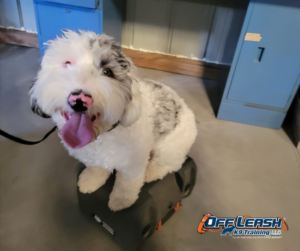
You’re sitting on the couch when your puppy starts chewing your fingers. A few minutes later, they chase your feet across the room, grabbing your socks and pant legs with their sharp little teeth. You offer a toy, but your puppy seems more interested in biting you.
If this sounds familiar, you’re not alone. Puppy biting is one of the most common challenges new dog owners experience.
To stop puppy biting hands and feet, redirect your puppy toward appropriate toys, briefly pause play when teeth touch skin, and provide enough rest and structured activity throughout the day. Consistent responses help puppies learn which behaviors are acceptable.
For puppy owners in Dayton, Ohio, understanding why biting happens is the first step toward building safer play habits and better household manners.
Why Do Puppies Bite Hands and Feet?
Puppies explore their surroundings with their mouths. Biting and mouthing are normal parts of early development, but they still need guidance to learn how to interact appropriately with people.
Several factors can contribute to frequent biting.
Puppies Explore the World With Their Mouths
Young puppies use their mouths to investigate objects, initiate play, and interact with other dogs.
A puppy may grab your fingers simply because your hands are moving nearby.
Likewise, feet and pant legs can become attractive targets when you walk across the room.
This does not necessarily mean your puppy is aggressive.
However, allowing repeated biting without teaching alternatives can make the habit more difficult to manage as your puppy grows.
Teething Creates an Urge to Chew
Puppies experience discomfort as their baby teeth are replaced by adult teeth.
Most puppies begin losing their baby teeth around 3 to 4 months of age, although the timing varies.
Chewing can provide an outlet during this period.
You may notice your puppy becoming more interested in toys, furniture, clothing, and anything else within reach.
Providing suitable chew items helps direct this behavior toward safer objects.
Moving Hands and Feet Trigger Play
Puppies are often attracted to movement.
When you quickly pull your hand away or walk faster to escape a playful puppy, the movement can become part of an exciting game.
Your puppy may respond by chasing, jumping, or grabbing harder.
This is especially common when puppies are already excited.
Overtired Puppies May Bite More
Puppies need considerable rest while they grow.
An overtired puppy may have difficulty settling and become increasingly mouthy.
Common signs include:
- Frantic running around the room
- Repeatedly grabbing clothing
- Difficulty responding to familiar cues
- Jumping and biting during play
- Becoming more restless late in the day
The American Kennel Club’s puppy-mouthing guidance identifies insufficient rest as one reason puppy biting can become more intense.
Puppies Are Still Learning Bite Control
Puppies begin learning how to control their mouths through interactions with littermates and other dogs.
When puppies join their new families, that learning process is not necessarily complete.
Owners must continue teaching them that human skin and clothing are not appropriate chew toys.
How to Stop Puppy Biting Hands and Feet: 7 Training Steps
The most effective approach focuses on preventing repeated biting, redirecting your puppy appropriately, and reinforcing gentle interactions.
Step 1: Keep Appropriate Puppy Toys Nearby
Prepare several toys before beginning play.
Suitable options may include:
- Puppy-safe rubber chew toys
- Soft toys designed for puppies
- Appropriately sized tug toys
- Puppy teething toys
- Food-dispensing toys
Choose toys that match your puppy’s size and chewing habits.
Avoid toys with loose pieces that could be swallowed.
Keep a toy within reach when you sit on the floor or interact with your puppy.
If your puppy approaches your fingers with an open mouth, present the toy before they begin biting.
When they choose the toy, continue interacting with them.
This teaches your puppy that toys are appropriate objects for chewing and play.
Step 2: Redirect Biting Before It Happens
Watch for signs that your puppy is becoming interested in your hands.
For example, they might:
- Stare at your moving fingers
- Open their mouth while approaching
- Paw at your arm
- Begin mouthing your sleeve
Before your puppy bites, offer a toy.
Move the toy gently to encourage your puppy to interact with it.
When your puppy grabs the toy, praise them and continue playing.
Avoid pushing the toy repeatedly into your puppy’s mouth.
Give them an opportunity to choose the toy voluntarily.
The goal is to teach your puppy which objects are appropriate for play.
Step 3: Pause Play When Teeth Touch Skin
If your puppy bites your hand during play, calmly stop moving and briefly pause attention or play. Once your puppy has settled, resume the interaction with an appropriate toy. If biting continues, end the play session and give your puppy an opportunity to rest or engage in a calmer activity.
Follow these steps:
- Stop moving your hands.
- Avoid pulling away dramatically.
- Pause the game briefly.
- Resume interaction when your puppy is calmer.
- Offer an appropriate toy before restarting play.
If your puppy continues biting, calmly create a little distance.
You may step behind a pet gate or briefly leave the play area if doing so is safe.
Keep the break short and neutral.
Do not yell, push, or physically intimidate your puppy.
Your puppy should gradually learn that gentle interaction allows play to continue, while biting people interrupts it.
The ASPCA’s guidance on puppy mouthing and biting recommends teaching puppies appropriate mouth behavior without using painful punishment.
Step 4: Teach Your Puppy Not to Bite Moving Feet
Puppies that chase feet need practice remaining calm around movement.
Begin in a quiet area with your puppy on a comfortable surface.
Keep an appropriate toy nearby.
Practice the following exercise:
- Stand still while your puppy is calm.
- Take one slow step.
- Reward your puppy if they remain calm without grabbing your feet.
- Take another step.
- Repeat with short pauses between movements.
If your puppy begins chasing your feet, stop walking.
Avoid kicking, shaking your feet, or running away.
Wait for a brief moment of calm, then redirect your puppy toward a toy.
Gradually increase the number of steps as your puppy improves.
For puppies that repeatedly attack pant legs, long tug toys can help direct their attention away from moving clothing.
Never pull your puppy along if they have grabbed your pants.
Remain still and calmly redirect or trade for an appropriate toy.
Step 5: Reward Gentle Behavior
Training should include more than responding when your puppy makes a mistake.
Pay attention to moments when your puppy interacts appropriately.
Reward behaviors such as:
- Sitting calmly beside you
- Choosing a chew toy
- Approaching without biting
- Relaxing near your feet
- Responding to their name
- Playing without grabbing skin or clothing
Rewards can include praise, treats, or continued play.
For example, if your puppy approaches you and sits instead of jumping and biting, reward that choice.
Over time, your puppy can learn that calm behavior produces enjoyable interactions.
Step 6: Create a Consistent Puppy Rest Routine
If your puppy becomes increasingly mouthy after extended play, they may need a break.
Provide a quiet, comfortable place where your puppy can rest without constant stimulation.
This might be a puppy pen, dog bed, or properly introduced crate.
A predictable routine can include:
- Potty breaks
- Meals
- Short play sessions
- Brief training exercises
- Appropriate chewing activities
- Quiet rest periods
Avoid keeping your puppy awake simply because they seem energetic.
Some puppies become more excitable when they are tired.
Instead, watch for signs that your puppy is struggling to settle.
A calm rest period may be more useful than another round of active play.
Step 7: Teach Basic Commands and Impulse Control
Simple obedience exercises can support clearer communication and calmer interactions. However, commands such as Sit, Come, and Leave It do not directly replace teaching appropriate chewing, gentle play, and bite inhibition.
Begin with short sessions focused on foundational behaviors.
Useful early skills include:
Name response: Reward your puppy for turning toward you when you say their name.
Sit: Teach your puppy to sit before receiving attention or beginning an activity.
Come: Reward your puppy for approaching you when called.
Leave It: Gradually teach your puppy to disengage from an object.
Settle: Reward relaxed behavior on a comfortable mat or bed.
Keep training sessions brief and appropriate for your puppy’s development.
These skills will not eliminate biting immediately, but they can give your puppy alternative ways to interact with you.
Dayton-area owners can explore puppy training in Dayton, Ohio for information about early obedience and foundational training.
What to Do When Your Puppy Suddenly Starts Biting Everything
Sometimes a puppy that was playing appropriately suddenly begins biting hands, feet, clothing, or furniture.
Before continuing the game, consider what your puppy needs.
Check for Overstimulation
Has your puppy been playing for an extended period?
Have several people been interacting with them?
Has the environment become noisy or exciting?
If so, end the active game and allow your puppy to settle.
Consider Whether Your Puppy Needs Rest
Puppies may become mouthier when they are exhausted.
Provide an opportunity to rest in a quiet area.
Avoid treating the need for sleep as a behavioral failure.
Offer an Appropriate Chew
If your puppy is teething, provide a suitable chew toy.
Choose something safe for their age and size, and supervise the activity.
Reduce the Difficulty of Training
If your puppy is too excited to respond to a familiar cue, pause the exercise.
Return to practicing when they are calmer.
Training is generally more productive when your puppy is comfortable and able to focus.
How to Stop Puppy Biting During Playtime
Play is an important part of puppy development.
You do not need to eliminate exciting activities, but you should create clear expectations.
Avoid Using Your Hands as Toys
Wrestling with your puppy using bare hands may encourage mouthing.
Instead, use an appropriate toy during interactive games.
This helps your puppy distinguish between objects intended for play and human skin.
Choose Toys That Create Distance
Longer tug toys can be particularly helpful for puppies that frequently grab fingers.
They allow you to participate in play while keeping your hands farther from your puppy’s mouth.
Pause Before Your Puppy Becomes Overexcited
Watch for changes in behavior.
If your puppy begins jumping, grabbing clothes, or biting harder, take a break.
Shorter play sessions may help your puppy remain more controlled.
Teach Everyone the Same Rules
Ask household members to follow consistent expectations.
If one person allows hand biting while another discourages it, your puppy may struggle to understand the difference.
Puppy Biting and Children: Important Safety Tips
Puppies may become especially excited around children because children often move quickly, speak loudly, and play energetically.
However, sharp puppy teeth can still cause injuries.
Always supervise interactions between puppies and young children.
Teach children to:
- Avoid running away from a biting puppy
- Keep hands away from the puppy’s mouth
- Avoid grabbing toys or food
- Refrain from rough wrestling
- Give the puppy space when resting or eating
- Ask an adult for help if biting begins
Use pet gates or other appropriate barriers when direct supervision is not possible.
Never expect young children to manage puppy biting on their own.
If your puppy repeatedly bites children, separate them safely and seek guidance from a qualified behavior professional. If a bite breaks the skin, wash the wound promptly with soap and running water and seek medical advice, particularly for deep wounds, bites to the hand or face, or concerns about infection or rabies exposure.
What Not to Do When Your Puppy Bites
Some common responses can make puppy biting more difficult to manage.
Do Not Hit or Physically Punish Your Puppy
Hitting, pinching, or grabbing a puppy by the scruff can cause fear and may increase defensive behavior.
Focus on prevention, redirection, and rewarding appropriate actions.
Do Not Encourage Rough Hand Play
Avoid deliberately provoking biting by waving your fingers near your puppy’s face.
Use toys during interactive games.
Do Not Chase Your Puppy
Chasing can turn unwanted behavior into an exciting game.
If your puppy grabs clothing or a household object, remain calm and redirect appropriately.
Do Not Expect Immediate Results
Puppy biting is a developmental behavior.
Training requires repetition, especially during teething and periods of excitement.
When Do Puppies Stop Biting Hands and Feet?
Many puppies become less mouthy as they mature, finish teething, and develop better impulse control.
Most permanent teeth are generally in place by around 6 to 7 months of age, although individual development varies.
However, finishing teething does not automatically eliminate learned biting habits.
Puppies that regularly receive attention or play through biting may continue doing so.
Consistent training helps prevent the behavior from becoming established.
Progress may include:
- Softer mouthing
- Choosing toys more frequently
- Less grabbing of clothing
- Shorter biting episodes
- Better responses to familiar cues
- Improved ability to settle after play
Look for these gradual changes instead of expecting biting to disappear overnight.
Is Puppy Biting Normal or a Sign of Aggression?
Most puppy mouthing occurs during play, exploration, or teething.
However, not every bite should be treated as harmless puppy behavior.
Normal play biting often occurs when a puppy is excited and interacting with toys or people.
Potential warning signs include:
- Biting accompanied by repeated stiffening or freezing
- Growling when someone approaches food or toys
- Snapping when touched or handled
- Biting that repeatedly breaks skin
- Strong fear responses
- Escalating behavior despite careful management
These signs do not automatically establish an aggression diagnosis, but they warrant attention.
If your puppy appears frightened, guards objects, or bites during handling rather than play, consult a veterinarian or qualified behavior professional.
Pain and other medical issues can sometimes contribute to defensive biting.
For additional guidance, see the AKC’s recommendations on addressing puppy biting.
Building Good Puppy Habits in Dayton, Ohio
Early training helps puppies develop skills that extend beyond biting.
For families in Dayton, Beavercreek, Kettering, Centerville, and surrounding communities, everyday routines offer opportunities to reinforce appropriate behavior.
Practice Calm Greetings
Reward your puppy for keeping their paws on the floor when family members approach.
Introduce Appropriate Chewing Habits
Provide suitable toys and supervise your puppy around household objects.
Build Confidence Gradually
Introduce your puppy to new environments, sounds, people, and experiences at a pace they can comfortably handle.
Maintain Consistent Household Rules
Use the same expectations for play, attention, and rest.
Continue Basic Obedience Training
Practice name response, Sit, Come, and other foundational skills.
For information about available training options, review dog training services in Dayton.
When Should You Consider Professional Puppy Training?
Consider seeking guidance if:
- Your puppy frequently bites hard enough to cause injury.
- Biting becomes increasingly difficult to manage.
- Your puppy reacts defensively during handling.
- Biting occurs around food, toys, or resting areas.
- You are struggling to establish consistent household routines.
- Your puppy shows significant fear or distress.
- Your family needs additional support teaching appropriate interactions.
A professional can help distinguish common developmental behavior from concerns that require an individualized training plan.
Early guidance can also help owners develop realistic expectations and appropriate training routines.
Frequently Asked Questions About Puppy Biting
Why does my puppy bite my hands and feet so much?
Puppies commonly bite during play, exploration, and teething. Moving hands and feet can trigger chasing, while excitement or insufficient rest may increase biting.
How do I stop my puppy from biting my ankles when I walk?
Stop moving when your puppy starts grabbing your ankles. Avoid running away, calmly redirect them toward an appropriate toy, and reward calm behavior when you begin walking again.
Should I let my puppy bite my hands while playing?
It is better to use toys instead of encouraging your puppy to chew your hands. This helps establish consistent expectations about appropriate play.
Why does my puppy bite more at night?
Some puppies become mouthier in the evening because they are overtired or overstimulated. A predictable routine with appropriate rest and shorter play sessions may help.
Does teething make puppy biting worse?
Teething can increase a puppy’s desire to chew. Safe, appropriately sized chew toys can provide an acceptable outlet.
How long does it take to stop puppy biting?
There is no fixed timeline. Many puppies become less mouthy as they mature, but improvement depends on consistent training, appropriate rest, and how frequently the behavior has been practiced.
When should I worry about puppy biting?
Seek professional guidance when biting repeatedly causes injuries, occurs alongside fear or guarding behaviors, or becomes increasingly intense.
Help Your Puppy Develop Better Play Habits
Puppy biting can be frustrating, especially when your hands, feet, and clothing become constant targets.
Fortunately, most common puppy mouthing can be addressed through consistent training and appropriate management.
Start by keeping suitable toys nearby, redirecting biting before it happens, pausing play when teeth touch skin, and providing enough opportunities for rest.
Reward calm interactions and practice simple obedience skills as your puppy grows.
For Dayton-area owners who need help with puppy biting, early obedience, or household manners, explore puppy training options or contact a Dayton dog trainer to discuss your puppy’s behavior and training needs.
