
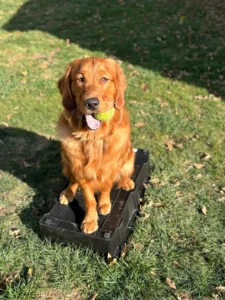
Does your dog turn into a spinning, whining, tail-wagging tornado the moment you leave the house? You bring them along to be part of the fun, and suddenly you’re holding the leash with both hands.
It’s frustrating, but consistent training can help many dogs learn to settle in distracting environments. Learning how to train a dog to settle gives your dog a clear way to relax, even when the world is loud and interesting. It takes patience and practice, but the plan is simple.
Why Dogs Struggle to Relax in Busy Places
Busy places are a lot for a dog to handle.
A few things usually play a part.
Too Much to Take In
Every smell, sound, and movement is new information. Your dog may be so busy checking everything out that calm behavior never gets a chance.
Excitement Takes Over
When dogs get worked up, thinking gets harder. A dog who knows how to relax at home may not be able to do it when they’re wound up.
Skills Don’t Automatically Travel
Dogs learn in context. A mat in your living room doesn’t feel the same as a mat in a parking lot, so the skill may need to be rebuilt in new places.
Needs Aren’t Met Yet
A dog who hasn’t had enough exercise, sniffing time, or rest may find it much harder to relax. Some dogs also feel nervous in crowds.
Set Your Dog Up for Success
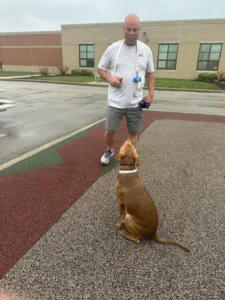
A few small steps before you head out can make settling easier.
- Meet your dog’s exercise needs first. A relaxed walk or appropriate play session may help, but avoid activities that leave your dog overly excited right before training.
- Allow time to sniff. It’s a natural way for dogs to unwind.
- Take a potty break. It’s one less thing to worry about.
- Use a well-fitted harness. Comfort matters.
- Bring a mat and good treats. Small, soft treats work well.
How to Train a Dog to Settle Step by Step
Building basic obedience skills can support calmer behavior around distractions. Learn more about dog obedience training in Dayton, Ohio.
Step 1: Make the Mat Awesome
Place a mat on the floor and toss a few treats onto it. Let your dog walk on, eat, and walk off. You’re teaching your dog that the mat is a great place to be.
Step 2: Reward Calm Choices
When your dog sits, lies down, or gives a relaxed sigh on the mat, reward quietly. Reward relaxed behavior with treats your dog enjoys, using a quiet voice and gentle movements.
Step 3: Stretch the Time
Wait a little longer between treats. Start with a few seconds and add time slowly. If your dog gets up, simply reset and make it easier.
Step 4: Add a Cue and a Release
Say “settle” just as your dog starts to relax on the mat. When you’re done, use a release word like “free” so your dog knows it’s over.
Step 5: Add Mild Distractions
Practice while you make dinner, fold laundry, or walk around the room. Build up slowly so your dog stays successful.
Settling Exercises to Practice
These short exercises build on how to train a dog to settle, one calm moment at a time.
- Mealtime mat: Ask your dog to settle while you eat.
- Sit, then sigh: Reward the moment your dog exhales and softens.
- Pause on walks: Stop, wait, and reward when your dog calms.
- Quiet chew time: Offer a safe chew on the mat to help your dog unwind.
Gradual Exposure: Build Up to the Real World
When you are learning how to train a dog to settle, don’t jump straight to a crowded event — work up one step at a time.
- Your driveway or porch. Practice settling outside your home.
- A parked car. The windows add new sights and sounds.
- The edge of a quiet parking lot. Keep your distance from the action.
- A quiet park bench. Short, calm visits come first.
- A friend’s yard. Add a new space and a new person.
- Busier places. Try patios or outdoor events at slow times.
If your dog can’t take treats, pants heavily, paces, or won’t look at you, you may be too close or staying too long. Move away and make it easier. End each outing while your dog is still doing well.
Use Positive Reinforcement
Reward what you want to see. Treats, praise, and a calm voice all help.
Stay relaxed yourself. Dogs can pick up on your tension. Avoid scolding or punishing, which can make stress worse. Over time, you can use fewer treats and more praise, but do it gradually.
Common Mistakes to Avoid
- Moving too fast. Introduce busier places gradually, once your dog can settle reliably in quieter environments.
- Expecting perfection. Progress comes in small wins.
- Skipping exercise. A dog with energy to burn will struggle to relax.
- Moving forward too quickly when your dog is overexcited. Increase distance from distractions and reward manageable moments of calm.
- Letting strangers crowd your dog. Protect your dog’s space.
- Ignoring stress signals. Panting, pacing, or yawning may mean your dog needs a break.
- Staying too long. Short visits often work better.
Real-World Tips
- Choose a spot with your dog’s back to the crowd.
- Arrive early, when places are quieter.
- Bring a chew or a snuffle mat.
- Politely tell people your dog is in training.
- Give your dog breaks when they need them.
For more ideas, read this guide to training a dog to be calm in public and this overview of public manners training.
Get Help Building Calmer Behavior at Home and in Public
If your dog is struggling to settle, you don’t have to figure it out alone. A professional trainer can look at your dog’s age, temperament, and habits, then help you build a plan that fits your life. A good plan for how to train a dog to settle starts where your dog can succeed.
Reach out for a free phone consultation to talk through your goals. Progress varies by dog, and regular practice at home is a big part of the process. You can also review the available dog training programs and pricing to explore the options offered by the Dayton team.
If your dog struggles to settle around distractions, contact the Dayton training team to discuss your goals and available training options.
FAQs
Why does my dog settle at home but not in public?
Public places are full of sights, sounds, and smells, and a skill learned in one spot doesn’t always show up in another. That is why how to train a dog to settle includes practicing in easier spaces first, then building up slowly.
Do I need a mat to teach my dog to settle?
No, but a mat can help. It gives your dog a clear cue and can travel with you. Over time, you can practice settling without it.
How do I know if my dog is stressed or just excited?
Look at your dog’s body language. Stress may show up as panting, pacing, yawning, or refusing treats, while excitement may look bouncy and wiggly. If you’re unsure, give your dog more space and a break.
Should I let strangers pet my dog while we’re training?
It’s okay to say no. Greetings can get your dog worked up and make it harder to settle. You can tell people your dog is in training and reward calm behavior instead.
Would you like a certified trainer to contact you?
PPC Contact Form
"*" indicates required fields
